

Southeast DC Under Attack
Stop ICE HQ Now
No deportation command center in the heart of our community
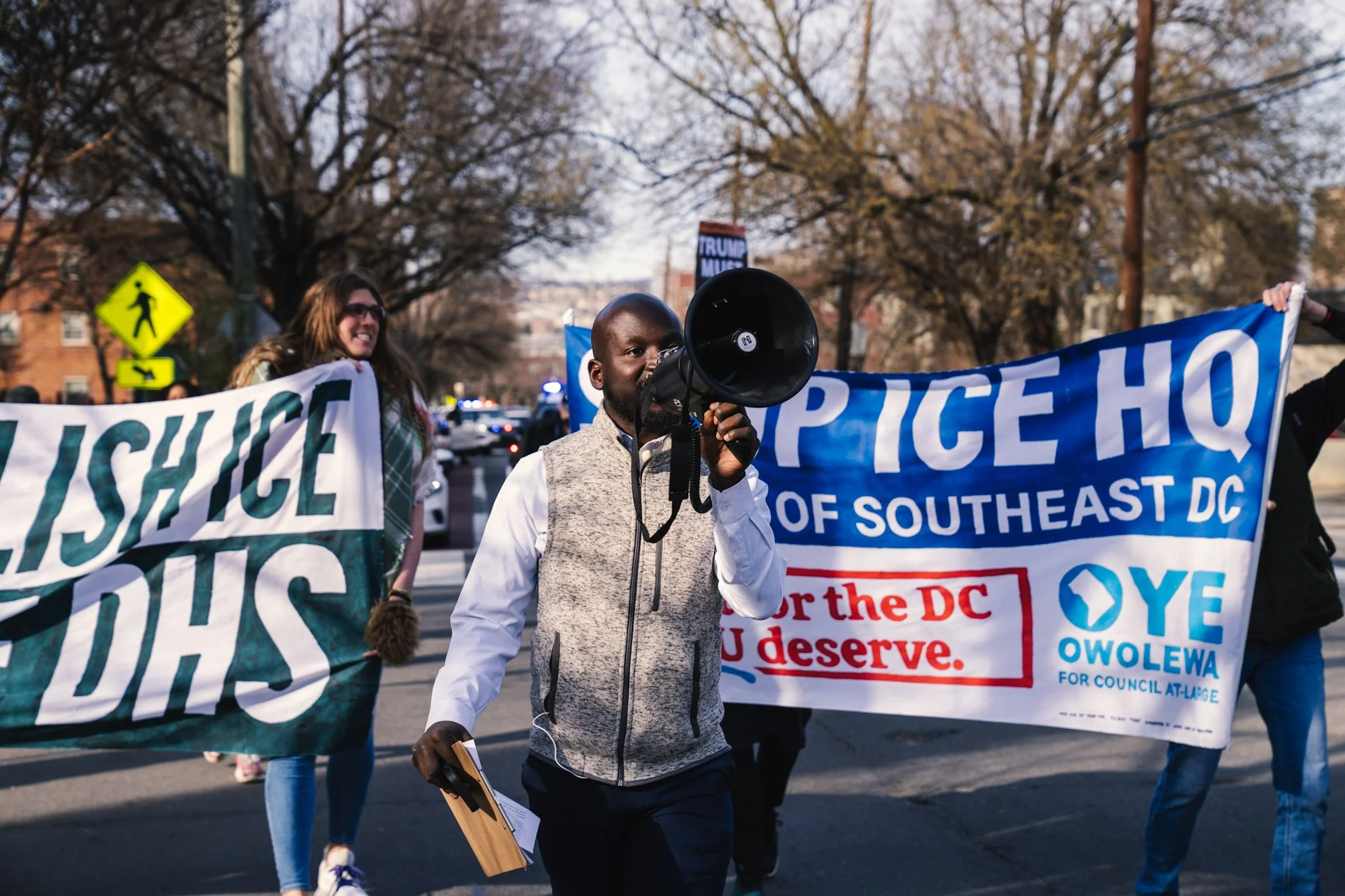
The federal government is building a $524 million ICE headquarters in Congress Heights — without a single vote from DC residents. Oye Owolewa is leading the fight to stop it. Clark Construction must withdraw.
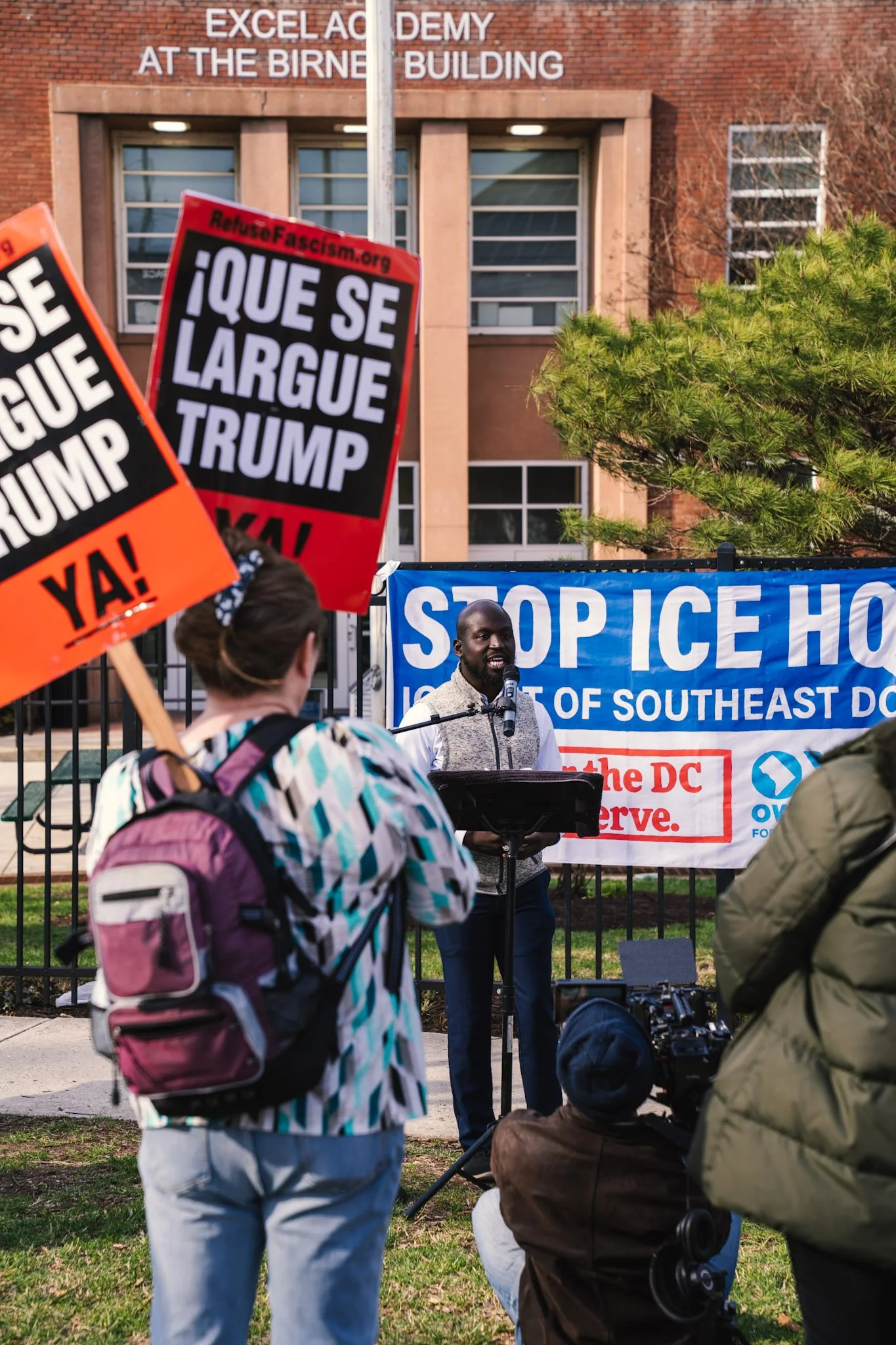
I join others in DC and across the US in demanding an immediate stop to the new ICE HQ in southeast DC.
WHAT'S HAPPENING
This Isn't Just a Building. It's a Command Center.'
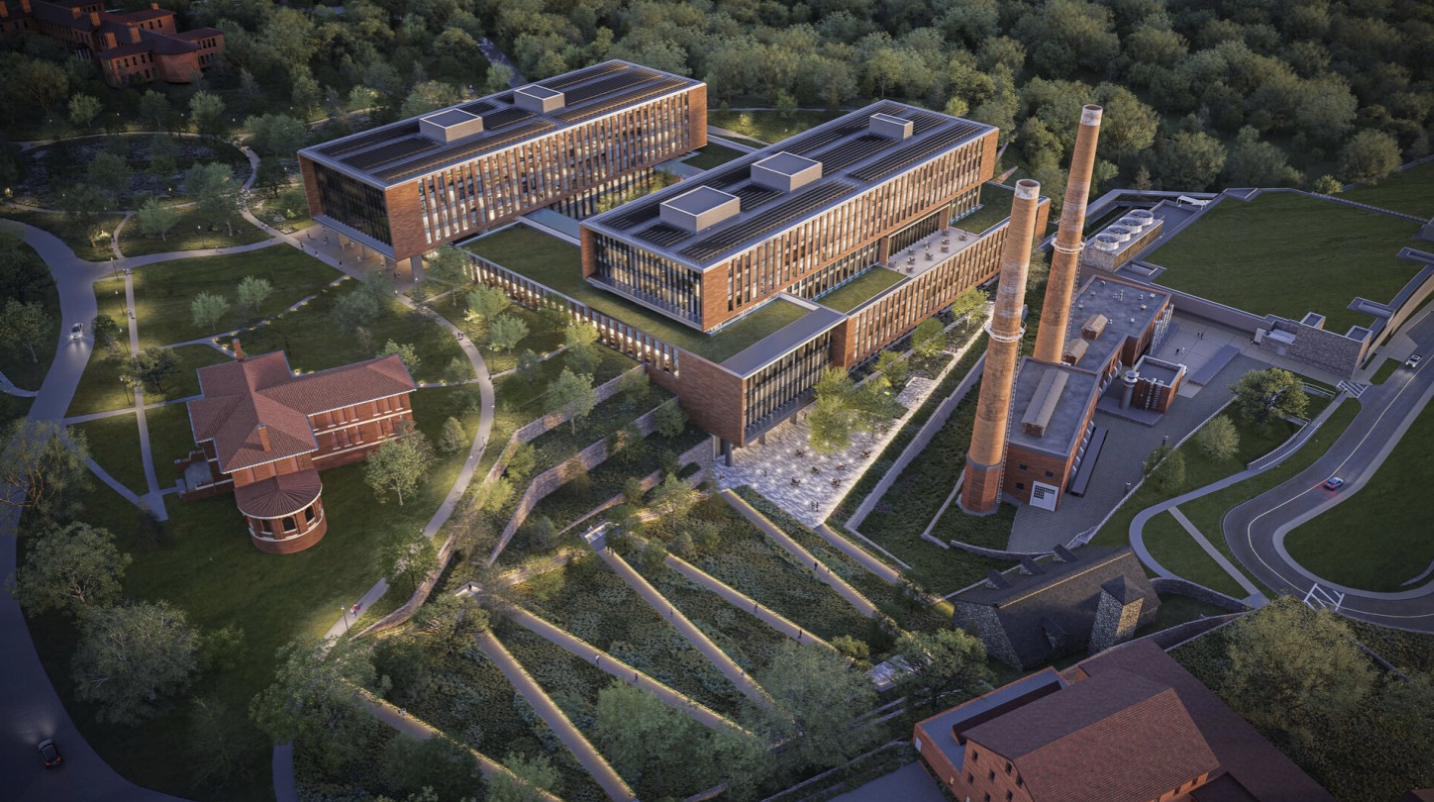
The federal government is building one of the largest federal construction projects since the Pentagon in the heart of Southeast Washington, DC. At St. Elizabeths West Campus in Congress Heights — a 176-acre site on Martin Luther King Jr. Avenue — the Department of Homeland Security is consolidating its scattered offices from 40 locations into a single fortified headquarters complex. The centerpiece of the current construction phase is a new 630,000-square-foot CISA headquarters and a new 570,000-square-foot ICE and Customs and Border Protection headquarters, both being built by Clark Construction under a $524 million contract. When complete, the campus will house more than 14,000 DHS employees. The total cost of the consolidation effort exceeds $3.2 billion in congressional appropriations — making it the most expensive federal building project in a generation.
To pay for it, the federal government used $288 million in Inflation Reduction Act funding — money sold to the public as a climate and community investment. That IRA money breaks down to $140.8 million for the CISA building, $80.8 million for the ICE and CBP headquarters, and $67 million for a new DHS parking garage and gatehouse. The project's architects, ZGF Architects and Olin Studio, designed the buildings to meet green building standards, and GSA has touted the project as a flagship example of federal sustainability. But that green framing obscures what is actually being built: the permanent command center for Immigration and Customs Enforcement — the agency now detaining over 61,000 people at an all-time record — funded in part by climate money that was supposed to benefit communities, including the one it is being built on top of.
Throughout this process, DHS has repeatedly overridden its own experts to maximize the campus footprint. The agency's own environmental review found the No Action alternative was preferable for the land's natural and cultural resources — they chose the maximum build-out anyway. When DHS Secretary Kristi Noem declared a December 2025 emergency to demolish 13 historic buildings on the campus — bypassing normal preservation review — GSA's own hired engineering firm had assessed those same buildings just months earlier and found them "generally in stable condition" and "viable for stabilization and future adaptive reuse." The National Trust for Historic Preservation and the DC Preservation League both formally opposed the demolition and as of early 2026 had received no response. The pattern is consistent: federal decisions imposed on Southeast DC, expert findings overridden, community voices ignored, and historic land cleared — without a single vote from the people who live here.
Timeline items:
2004 — Federal planning begins at St. Elizabeths
2018 — ICE & CISA added to the campus plan
July 2022 — One signature. No vote. Maximum build-out approved.
August 2024 — Clark Construction wins the $524M contract
March 14, 2026 — Southeast DC fights back
April 14, 2026 — We take it directly to Clark Construction
"I call on Clark Construction to immediately withdraw from the ICE headquarters construction project at St. Elizabeths West Campus..."
"I call on Clark Construction to immediately withdraw from the ICE headquarters construction project at St. Elizabeths West Campus..."
"I call on Clark Construction to immediately withdraw from the ICE headquarters construction project at St. Elizabeths West Campus..."

-
2004 — Federal Planning Begins at St. Elizabeths GSA initiates the master planning process for DHS headquarters consolidation at the 176-acre St. Elizabeths West Campus in Congress Heights, Southeast DC. At this point, DHS is scattered across more than 40 locations in the National Capital Region. DC residents have no vote in Congress and no meaningful role in the planning process.
2008 — First Environmental Impact Statement Completed GSA completes the initial Environmental Impact Statement and issues a Record of Decision selecting a 4.5 million square foot campus consolidation. The West Campus is already a designated National Historic Landmark.
2012 — Master Plan Amendment Adds FEMA East Campus GSA issues a second EIS covering FEMA headquarters on the East Campus. DC has no Senate vote and no voting House Delegate — federal agencies make every decision unilaterally.
2018 — ICE & CISA Added; East Campus Development Dropped CISA is formally established by Congress and added to the St. Elizabeths housing plan. ICE headquarters is confirmed for the campus. East Campus development is abandoned, and all construction is refocused on the West Campus. The campus footprint grows significantly.
2020 — Final Supplemental Environmental Impact Statement DHS's own environmental review — the Master Plan Amendment 2 SEIS — finds that the No Action alternative is the environmentally preferable choice for natural and cultural resources. It would mean less ground disturbance, fewer trees impacted, and more historic resources preserved. DHS chooses the maximum build-out anyway.
July 13, 2022 — One Signature. No Vote. Maximum Build-Out Approved. A single DHS official — Dr. Teresa Pohlman, Executive Director of Sustainability and Environmental Programs — signs the Record of Decision selecting Alternative B, the largest possible campus footprint. No DC community vote. No congressional representation. No recourse for residents.
August 2023 — $288 Million in IRA Funding Announced The Biden administration announces $288 million in Inflation Reduction Act funding for the St. Elizabeths campus: $140.8M for CISA headquarters, $80.8M for ICE headquarters, and $67M for a new parking garage and gatehouse. The project is marketed as a model of federal sustainability and green investment.
August 16, 2024 — Clark Construction Wins $524 Million Contract Clark Construction — based in Bethesda, Maryland — is awarded the CISA headquarters contract, GSA's largest single IRA project investment to date. Clark previously built the $435M Coast Guard headquarters on this same campus. Construction begins fall 2024 and is actively underway today.
August 2025 — Trump Declares DC Crime Emergency; Federal Surge Begins President Trump declares a crime emergency in DC, flooding the city with federal law enforcement — many focused on immigration enforcement. MPD is ordered to cooperate with ICE. Over 1,400 DC residents are arrested on immigration violations. ICE arrests are documented outside DC schools during arrival and dismissal.
September–October 2025 — MPD-ICE Collaboration Exposed Despite Mayor Bowser declaring the emergency over on September 10, the Washington Post documents at least six incidents of MPD patrolling alongside masked HSI and CBP agents. Bowser initially denies it, then admits it when shown video evidence. DC Councilmember Brianne Nadeau holds a four-hour public hearing — more than 50 residents testify.
December 2025 — Emergency Demolition Order for Historic Buildings DHS Secretary Kristi Noem invokes an emergency declaration to demolish 13 historic buildings on the St. Elizabeths campus, bypassing normal historic preservation review. GSA's own hired engineering firm (AECOM) had assessed the same buildings just months earlier and found them "generally in stable condition" and "viable for stabilization and future adaptive reuse." The National Trust for Historic Preservation and DC Preservation League formally oppose — and receive no response.
March 14, 2026 — Southeast DC Fights Back Oye Owolewa leads 30+ Southeast DC residents in a press conference and march along MLK Avenue to the DHS facility entrance at St. Elizabeths. Demonstrators carry signs and demand the federal government halt the project and engage with the community. The Stop ICE HQ campaign launches.
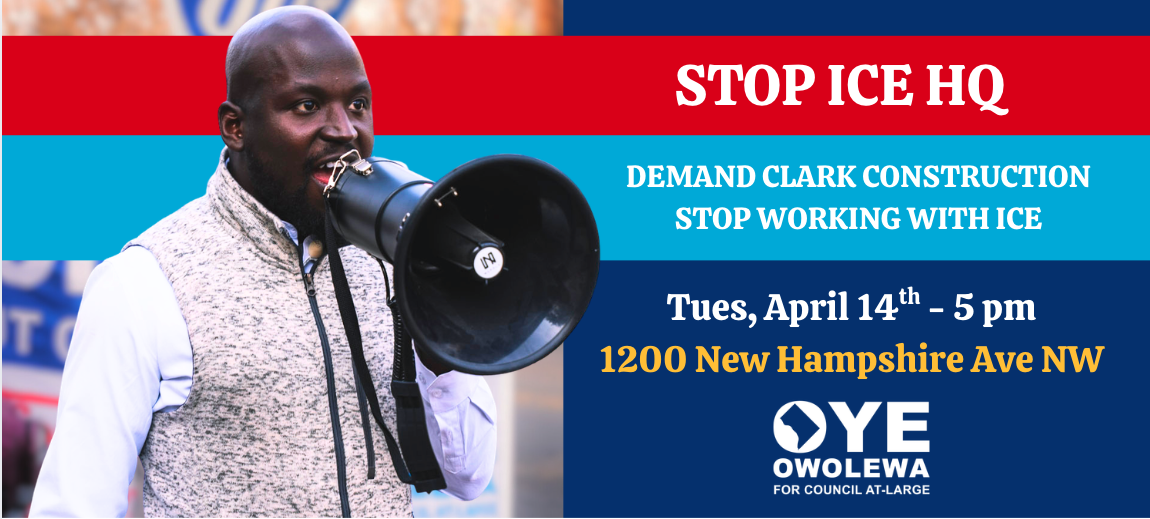
April 14, 2026 — We Take It to Clark Construction Coalition protest at Clark Construction's DC office. 1200 New Hampshire Ave NW, Suite 510. Tuesday, April 14 · 5:00–6:30 PM. Demand: Clark must immediately withdraw from all ICE-related construction in Washington, DC. Join us.
-
Description text goes here
-
Record of Decision of the Department of Homeland Security to Continue Headquarters Consolidation at the St. Elizabeths West Campus, Washington, D.C.
This Record of Decision documents the Department of Homeland Security’s (DHS or Department) decision on its proposed action to continue consolidation of Headquarters offices at the St. Elizabeths West Campus in Washington, DC in accordance with the planned development of facilities established in the General Services Administration’s (GSA) DHS Headquarters Consolidation at St. Elizabeths Final Supplemental Environmental Impact Statement, dated August 2020 (hereafter “Master Plan Amendment 2 SEIS”).
Background
The Department proposes to secure and strengthen its control over critical operations by continuing to consolidate its core headquarters facilities with those of its operating components at the St. Elizabeths West Campus. From its inception in 2003, DHS offices have been dispersed among more than 40 locations in and around the National Capital Region (NCR). These disparate office locations continue to adversely impact critical communication, coordination and control, and cooperation among DHS components, particularly in responding to significant natural disasters or terrorist threats. DHS remains committed to addressing these limitations by fostering a “one DHS” or “Unity-of-Effort” culture that optimizes decision making, threat prevention, and response capabilities across the entire spectrum of its operations.
In addition to improving operational efficiencies, the magnitude of the Department’s real estate lease commitments in the NCR continues to drive the consolidation of office space and minimizing the number of different locations in which DHS components utilize space. During the next 10 years, approximately 4.7 million gross square feet (gsf) of DHS leased office space will need to be replaced. Without the development of new office and shared-use space addressed in Master Plan Amendment 2, DHS would continue to occupy predominately leased space within the NCR and forego multiple vital efficiencies gained through shared services and colocation while incurring higher real estate and security costs.
The St. Elizabeths West Campus is a 176-acre federal facility located on the west side of Martin Luther King, Jr. (MLK) Avenue in southeast Washington, DC. On March 7, 1991, the West Campus was designated as a National Historic Landmark. The Department of Health and Human Services declared the West Campus excess in January 2001. GSA took custody and control of the property and initiated a Master Planning Process for office space, shared-use space, and adaptive reuse of historic buildings on the West Campus in 2004. As the agency responsible for meeting DHS’s office space requirements, GSA determined that redevelopment of the St. Elizabeths West Campus was the only reasonable alternative that would provide the Department adequate secure office space within the NCR.
In June 2005, GSA, as lead agency, issued a Notice of Intent (NOI), and on June 28, 2007, a revised NOI, to prepare an Environmental Impact Statement (EIS) in compliance with the National Environmental Policy Act (NEPA) for the proposed redevelopment of the West Campus. GSA completed the EIS for the 2008 Master Plan (EIS Number 20080452) and issued a Record of Decision (ROD) on December 16, 2008 selecting the alternative that consolidated 4.5 million gsf of secure and shared-use space, and associated parking facilities, on both the West and East Campus.
GSA published a NOI on September 15, 2009 to prepare an EIS for the amended DHS Headquarters Consolidation Plan to address development of up to 750,000 gsf of office space, plus parking, to house the Federal Emergency Management Agency (FEMA) on the East Campus and to reevaluate transportation improvements for the consolidated DHS Headquarters. GSA completed the Master Plan Amendment EIS (EIS Number 20120049) and issued a ROD on May 17, 2012.
DHS acted as a cooperating agency in the EIS development process, in accordance with the Council on Environmental Quality’s (CEQ) NEPA regulations (40 CFR Parts 1500 – 1508) for both the 2008 Master Plan and the 2012 Master Plan Amendment. DHS closely coordinated with GSA providing subject matter expertise, project review, and analyses throughout the NEPA review process. DHS adopted both the 2008 Master Plan and 2012 Master Plan Amendment Environmental Impact Statements on March 30, 2016 and issued a ROD on November 15, 2016 to unify the Department’s Headquarters offices by consolidation at St. Elizabeths.
In 2018, GSA and DHS determined not to further pursue development of Headquarters facilities on the St. Elizabeths East Campus. Accordingly, in November 2018, GSA published a NOI to prepare a Supplemental EIS (SEIS) for Amendment 2 of the St. Elizabeths Master Plan, which eliminates development on the East Campus and re-evaluates development on the West Campus to accommodate 4.1 million gsf of secure office and shared-use space, and 1.6 million gsf of associated parking, for the DHS Headquarters consolidation. Also, in 2018, The Cybersecurity and Infrastructure Security Act of 2018 established the Cybersecurity and Infrastructure Security Agency (CISA) within the DHS. This component, though developed from legacy components of DHS, required an integrated and consolidated housing plan that will be accommodated at St. Elizabeths West Campus. DHS requested that GSA factor this into the planning for St. Elizabeths.
On November 19, 2018, GSA published an NOI to prepare an EIS for St. Elizabeths Master Plan Amendment 2, which eliminates development on the East Campus and re-evaluates development on the St. Elizabeths West Campus to accommodate 4.1 million gross square feet of secure office and shared-use space, and 1.6 million gross square feet of associated parking, for the DHS Headquarters consolidation. The proposed action is needed for efficiency, to reflect the current condition of the historic buildings, to reduce costs, and to accelerate the completion of the DHS consolidation.
The GSA prepared numerous environmental, technical, historic preservation, transportation, and other documents in support of its decision to redevelop the St. Elizabeths West Campus. The 2020 SEIS entitled The Department of Homeland Security Headquarters Consolidation at St. Elizabeths Final Supplemental Environmental Impact Statement (EIS Number 20200173) was noticed in the Federal Register on August 28, 2020 and involved over 30 different Stakeholders including federal and DC representatives, non-governmental organizations, and private citizens. DHS acted as a cooperating agency for the EIS and has closely coordinated with GSA and other stakeholders since the initial proposal to develop St. Elizabeths began. GSA issued a ROD for the 2020 Master Plan Amendment 2 on October 9, 2020. The DHS is satisfied that these plans are sufficient that DHS can continue to consolidate at the campus.
Continue Consolidation and Operation upon the Campus
In 2018, after completion of the Center Building, the DHS Headquarters officially moved to St. Elizabeths from the Nebraska Avenue Complex and multiple other locations within the NCR. Since that time, DHS considered how the campus development contributes to “Unity of Effort” across the DHS Organization, by consolidating leadership and co-locating Headquarters functions including, Policy, Management, and Operational organizations to the extent possible. The review ensured that DHS space within the National Capital Region meets the Department’s Real Property policies, objectives, and space efficiency targets. Since the development of the initial St. Elizabeths plan, between 2006 and 2009, the operational and real estate landscapes of the Federal Government and within DHS specifically changed, particularly as to lease space. Additionally, in 2018, the newly established component CISA required centralized and specialized space for its mission set. DHS, together with GSA, therefore adjusted its original housing requirements and reviewed the current leases throughout the NCR. DHS considered elements impacting the current real property environment including:
The stand-up of CISA.
To reflect the current condition of the historic buildings of the West Campus,
To accelerate completion of the DHS consolidation.
Direction from OMB’s “Freeze the Footprint” and “Reduce the Footprint” to halt and reduce the expansion of office and warehouse space.
The increasing trend in the workplace towards “flexible workspace” designs and proliferation of remote teleworking.
Severe pressure to reduce budgets created funding delays and shortfalls for GSA and DHS and increase efficiency in executing the St. Elizabeths construction plan.
DHS reviewed this information in the context of the consolidated campus and decided that occupancy of and consolidation to the campus should continue and should be conducted consistent with the expiration of DHS leases across the NCR. While this may mean in certain cases that the exact components of DHS that occupy the campus may not be the same as originally contemplated, DHS does commit that the personnel, traffic, and other activities will not exceed the space, and associated infrastructure that has been analyzed in the MP2 SEIS.
Preparation of the Master Plan Amendment 2 SEIS involved more than 30 stakeholders, including federal agencies, DC representatives, non-governmental organizations, and private citizens. DHS acted as a cooperating agency for the SEIS and continued the same level of close coordination with GSA throughout the NEPA review process that it has provided since GSA’s initial proposal to develop the St. Elizabeths campus for DHS consolidation. DHS finds that the Master Plan Amendment 2 SEIS meets the standards for an adequate statement under the CEQ’s NEPA regulations. DHS further concludes, from its independent review of the SEIS and all underlying analyses, that the Department’s comments and suggestions have been satisfied.
Alternatives
DHS can either continue its current practice of renewing disparate leases or continue to work with GSA and consolidate to the St. Elizabeths West Campus. In accordance with 40 CFR 1502.14(e), DHS’ preferred alternative is to occupy and consolidate to St. Elizabeths. DHS will unify our core headquarters facilities with those of our operating components at the St. Elizabeths Campus. As future funding allows, and as current DHS leases expire in the NCR, DHS component offices will move to St. Elizabeths West Campus.
During the initial planning for the Master Plan Amendment 2, urban planners, architects, architectural historians, environmental scientists, engineers, and economists considered site constraints, traffic impacts, and the mission of DHS to develop alternatives to support the DHS Headquarters consolidation on the St. Elizabeths West Campus. GSA and DHS considered comments received during the scoping period for the proposed action and a range of alternatives to accommodate the increase of DHS employees and support staff at the West Campus. The 2020 Master Plan Amendment 2 Final EIS addressed the No Action Alternative and two action alternatives for the DHS Headquarters consolidation.
No Action Alternative
Under the No Action Alternative, GSA would develop the St. Elizabeths West Campus as described in the Master Plan as approved by the National Capital Planning Commission (NCPC) on January 8, 2009. The development would provide 1,141,133 gross square feet of office and related space on the plateau site, with no development on the Sweetgum Lane site, resulting in a total of 3.8 million gross square feet of office and related space on the West Campus. This development would disturb approximately 6 acres on the plateau site. Parking would be provided at a ratio of one parking space for every four employees (1:4). On the West Campus, 1.2 million gross square feet of parking would be constructed above and below grade. No buildings would be demolished within the plateau or Sweetgum Lane sites under the No Action Alternative.
Master Plan Amendment 1, which was approved by NCPC in June 2012, included the development of office space and parking on the North Parcel of the East Campus. The East Campus is under the control of the District of Columbia; therefore, the construction of DHS facilities on the East Campus is not feasible and was not included under the No Action Alternative.
Alternative A
Under Alternative A, 1.2 million gross square feet of office space would be organized into three separate office structures (proposed Buildings A1, A2, and A3) organized around two open courtyards on the plateau site, resulting in a campus setting that correlates to the organization of the historic buildings on the St. Elizabeths West Campus. Building heights would likely be designed to reach between three and eight stories. The largest part of the structures would generally have an east-west orientation, which would be ideal for optimizing the use of daylight and energy efficiency.
The building organization also relates well to the direction of stormwater flow from east to west. The central open courtyards would be tiered from east to west, in conjunction with site topography. Buildings could be linked below grade at these elevation drops to facilitate internal circulation, fit naturally on the site, and minimize the need to disturb existing topography and vegetation. Building A1 would be stepped down into the ravine near Buildings 56/57 to stabilize the slope in that area. Buildings 56/57 would be integrated into the design of Building A1. Buildings 52 and 64 would be retained, rehabilitated, and adaptively reused. Buildings 60, 66, 67, 68, and 69, which total 97,685 gross square feet, would be demolished under Alternative A. Approximately 7 acres of the plateau site would be disturbed as a result of demolition and construction activities under Alternative A.
Under Alternative A, 175,000 gross square feet of office space (proposed Building C1) would be constructed on the Sweetgum Lane site, organized into primarily below-grade construction, with one two-story building constructed to mirror the northwest corner of the Munro Building. The building would include up to three below-grade levels, which would take advantage of the site slope from east to west, allowing the western edge of the building to receive daylight. A central courtyard would provide internal daylighting; the building could be linked below grade to the DHS Operations Centers. Building 15, which totals 2,749 gross square feet, would be demolished under Alternative A. Approximately 1.5 acres of the Sweetgum Lane site would be disturbed as a result of demolition and construction activities under Alternative A.
Under Alternative A, an additional 1,014 employee parking spaces would be provided on the West Campus resulting in a 1:4 parking ratio. The new spaces would be added to the previously proposed underground parking garages at Gate 1 and Gate 2 on the east side of the West Campus. Detailed building and site design of the plateau and Sweetgum Lane sites would define the following improvements:
Sidewalk locations and walkways between buildings.
Alterations to the ravine including enhanced pedestrian connections and landscaping.
Engineering for stabilization of steep slopes including building foundations.
Realignment of site drainages and landscaping in response to building design.
Shuttle bus drop-off locations.
Shipping/receiving areas for buildings.
Electric power, communications, and utility corridors.
Stormwater management controls.
Remediation of contaminated soils.
Alternative B (The Preferred Alternative)
Under Alternative B, 1.2 million gross square feet of office space will be provided in two separate office structures (proposed Buildings B1 and B2) organized around two enclosed courtyards on the plateau site. Building heights will be designed to reach between three and eight stories. The largest part of the structures will have an east-west orientation to optimize the use of daylight and energy efficiency. The building organization also relates well to the direction of stormwater flow from east to west.
The courtyards will be secured to provide open space for building occupants. Buildings could be linked below grade at these elevation drops to facilitate internal circulation. The buildings will fit naturally on the site minimizing the need to disturb existing topography and vegetation on the plateau site. Building B1 will be stepped down into the ravine near Building 56/57 to stabilize the slope in that area. Building 56/57 will be integrated into the design of Building B1. Buildings 52 and 64 will be retained, rehabilitated, and adaptively reused. Buildings 60, 66, 67, and 68, which total 70,277 gross square feet, will be demolished under Alternative B. Building 69, which is 27,588 gross square feet, will be evaluated by GSA to determine if it can be feasibly retained and used as Federal office space. GSA will report findings to the Memorandum of Agreement (MOA) Consulting Parties as updated in 2021 and consider their comments on the findings. Approximately 8 acres of the plateau site will be disturbed as a result of demolition and construction activities under Alternative B.
Under Alternative B, 175,000 gross square feet of office space will be constructed on the Sweetgum Lane site (proposed Building C1) in the same manner as Alternative A. Building 15, which totals 2,749 gross square feet, will be demolished under Alternative B. Approximately 1.5 acres of the Sweetgum Lane site will be disturbed as a result of demolition and construction activities under Alternative B. Under Alternative B, an additional 1,014 employee parking 1 spaces will be provided on the West Campus resulting in a 1:4 parking ratio. The new spaces will be added to the previously proposed underground parking garages at Gate 1 and Gate 2 on the east side of the West Campus.
Detailed building and site design of the plateau and Sweetgum Lane sites will define the following improvements:
Sidewalk locations and walkways between buildings.
Alterations to the ravine including enhanced pedestrian connections and landscaping.
Engineering for stabilization of steep slopes including building foundations.
Realignment of site drainages and landscaping in response to building design.
Shuttle bus drop-off locations.
Shipping/receiving areas for buildings.
Electric power, communications, and utility corridors designed for buildings and site Improvements.
Stormwater management controls.
Remediation of contaminated soils.
Environmental Consequences
The environmental consequences of each alternative were analyzed by resources area. DHS considers environmental factors equally with technical, operational, and economic factors. The federal personnel and visitors will be working and carrying out the daily business of DHS in a manner similar to what and how they do today in and around the NCR. This day-to-day business is not expected to have any adverse effect to the planned and executed “as-built” campus itself.
DHS will move its personnel to the campus as construction continues to be completed, and, concordant with the expiration of corresponding leases across the organization. This determination and consideration regarding the daily movement of personnel to and from the campus are thoroughly considered in the SEIS. DHS has also committed to an active role in GSA’s transportation management plan and in the long-term operation of the campus. All of those impacts are expected to be consistent with GSA’s analyses in Chapter 4 of the SEIS and can be accessed here
http://www.stelizabethsdevelopment.com/document_center.cfm and https://www.gsa.gov/about-us/regions/welcome-to-the-national-capital-region-11/buildings-andfacilities/project-information-nepa/st-elizabeths-final-supplemental-eis
Environmentally Preferable Alternative40 Code of Federal Regulations [CFR] § 1505.2(a) of the Council on Environmental Quality (CEQ) regulations implementing the procedural requirements of NEPA requires Federal agencies, including GSA, to “identify alternatives considered by the agency in reaching its decision, specifying the alternative or alternatives considered environmentally preferable.” GSA outlined the environmentally preferable alternative(s) by resource area to reflect the balanced approach necessary when evaluating the Master Plan Amendment 2. Table 2 presents the environmentally preferable alternative by resource area as identified by the impact analyses in the Final EIS. The No Action Alternative is the environmentally preferable alternative for natural and cultural resources.
The No Action Alternative would result in less ground disturbance and impact fewer trees than Alternatives A and B. The No Action Alternative would also retain more historic resources than Alternatives A and B. Alternatives A, B, and the No Action Alternative, are the environmentally preferable alternatives for social and economic resources, air quality, noise, transportation, utilities, and environmental contamination because impacts are similar among the alternatives. The environmentally preferable alternative is consistent with GSA’s identified environmentally preferable alternative in the GSA ROD.
DHS consolidation to the campus includes the redevelopment and the transportation improvements associated with getting personnel to the campus. Prior to the DHS housing requirements, the St. Elizabeths West Campus was in a state of severe neglect and dilapidation. Redevelopment and ongoing use and management of the campus are environmentally preferable. That acknowledged, amongst the redevelopment alternatives, the following table is excerpted from GSA’s ROD and represents DHSs position that, generally, redevelopment of the campus and consolidation of the campus is environmentally preferable and within the redevelopment alternatives, the environmentally preferable alternative varies by resource.
Statement of DecisionBased on its independent review of the Master Plan Amendment 2 SEIS, DHS concludes that the proposed action to redevelop the St. Elizabeths West Campus to accommodate 4.1 million gsf of secure office space and shared-use space, and 1.6 million gsf of associated parking is substantially the same as the Department’s decision to continue consolidation of its Headquarters offices at the West Campus in accordance with the planned development of facilities covered by the Master Plan Amendment 2 SEIS.
Therefore, based on its full and independent review of the SEIS, comments from stakeholders, mitigation, and other factors discovered and analyzed during the NEPA process, it is the decision of the Department of Homeland Security to adopt the Master Plan Amendment 2 SEIS (EIS Number 20200173) and to continue consolidation of its Headquarters offices at the St. Elizabeths West Campus in accordance with the planned development of facilities covered by the Master Plan Amendment 2 SEIS. Future DHS consolidation at the West Campus will proceed as construction allows and as current DHS leases expire in the NCR. In accordance with 40 CFR § 1506.3(b)(2), DHS, as a cooperating agency, concludes, from independent review, that the Department’s comments and suggestions regarding the SEIS and underlying reports and analyses have been satisfied and adopts the Master Plan Amendment 2 SEIS without republishing.
This Record of Decision is approved this 13th day of July, 2022.
Dr. Teresa Pohlman
Executive Director, Sustainability and Environmental Programs
Office of the Chief Readiness Support Officer
Department of Homeland Security
-
FOR IMMEDIATE RELEASE
March 27, 2026Coalition to Demand Clark Construction to End Role in Building New ICE HQ, Demand Withdrawal from Project
Washington, DC — Rep. Oye Owolewa and a coalition of community organizations, advocates, and residents will protest outside Clark Construction’s DC office on Tuesday, April 14, from 5:00 PM to 6:30 PM at 1200 New Hampshire Ave NW, Suite 510. The coalition’s demands are clear: Clark Construction must immediately withdraw from any ICE-related projects in Washington, DC.
“Clark Construction is making a deliberate choice to profit from the expansion of ICE,” Owolewa said. “This is not neutral work. Building cages, offices, and enforcement infrastructure for ICE has real human consequences—and Clark is choosing to be part of that.”
The action will feature speakers, poets, chanting, and public education, as protesters engage passersby and call attention to the private companies that profit from immigration enforcement.
Organizers say this protest is the beginning of a broader pressure campaign that will continue to escalate until Clark responds.
“We are prepared to keep showing up,” Owolewa continued. “Clark’s reputation, partnerships, and public standing are all on the line.” There is almost unanimous local opposition to ICE’s activities in the district.
Media Contact:
Verdell A. Wright
202-302-8866 -
ANC Endorsement Form - Say 'No' to ICE in Southeast DC
WHEREAS, the federal government is developing and expanding the Department of Homeland Security campus at St. Elizabeths West in Southeast, Washington, DC, including the construction of a new Immigration and Customs Enforcement (ICE) headquarters and related Department of Homeland Security facilities; and
WHEREAS, the St. Elizabeths redevelopment project includes significant federal funding and contracts with private construction and design firms, including Clark Construction and ZGF Architects; and
WHEREAS, the expansion of federal enforcement infrastructure in Washington, DC has raised concerns among residents about immigration enforcement practices and their impact on immigrant communities in the District; and
WHEREAS, Southeast is a historically Black community that has long faced underinvestment in housing, healthcare, education, and economic opportunity; and
WHEREAS, many residents and community organizations have expressed opposition to expanding ICE infrastructure in the District and have called for greater transparency and public engagement regarding federal development at the St. Elizabeths campus; and
WHEREAS, residents of Washington, DC continue to live under taxation without representation in Congress and have limited democratic authority over major federal development projects imposed within the District; and
WHEREAS, District residents deserve democratic participation in decisions that significantly affect their neighborhoods and public safety;
NOW, THEREFORE, BE IT RESOLVED, that this resolution calls for an immediate halt to the construction and expansion of Immigration and Customs Enforcement facilities at the St. Elizabeths West campus and instead host meaningful conversations with District residents and community stakeholders; and
BE IT FURTHER RESOLVED, that the federal government should prioritize investments in housing, healthcare, education, food access, and economic opportunity for residents of Southeast Washington, D.C. rather than expanding federal enforcement infrastructure; and
BE IT FURTHER RESOLVED, that Clark Construction, ZGF Architects, and any other private contractors involved in the development of ICE facilities at St. Elizabeths end their participation in this project and all others that expand deportation infrastructure in the District; and
BE IT FURTHER RESOLVED, that copies of this resolution be transmitted to the Mayor of the District of Columbia, the Council of the District of Columbia, the General Services Administration, the Department of Homeland Security, and the District’s Delegate to Congress.
Card 6: 📞 Press Contact → Verdell A. Wright · verdell@vote4oye.com · 202-302-8866